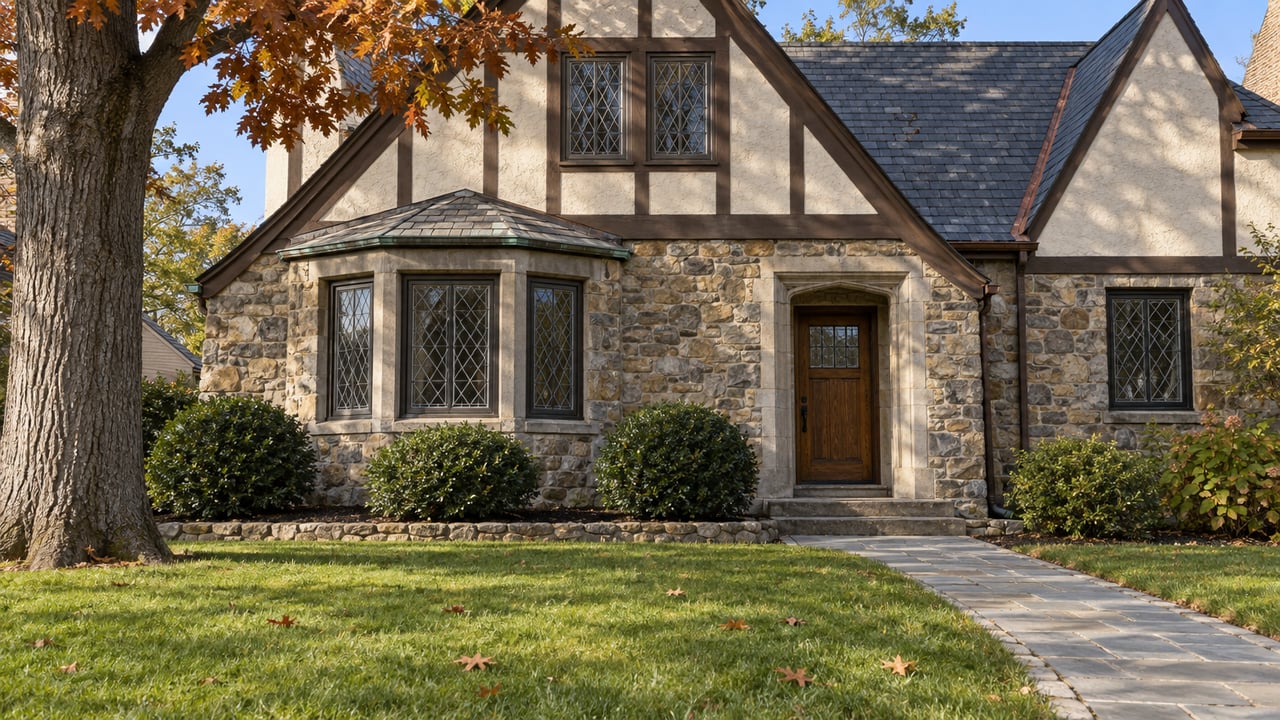
Drive past the corner of Merrick and Kirkwood Avenues and you might miss it: a small Victorian cottage set back from the road, one block south of the current library. It has a state historic marker and a name on file with the Town of Hempstead. Its long-term stewardship remains unresolved.
The cottage's history and current stewardship offer one way to consider Merrick's preservation efforts alongside the current library's programs.
Three Addresses Before This One
The Merrick Library did not start as a building. It started in 1891 as fifty donated books in the hayloft of a stable on the Cammann family farm, put together by two Merrick teenagers, Edward C. Cammann and Richard P. Kent. From there it moved to a shack on the William Hewlett farm, then to a fifteen-foot room in a windmill tower behind the Church of the Redeemer on Kirkwood Avenue. Neither stop was meant to last, and neither did.
In 1897, Cammann's aunt, Katherine L. Cammann, donated the corner lot at Merrick and Kirkwood, and the community raised the money to build something permanent. It cost $1,150. That building is the one still standing at 2369 Merrick Avenue, the fourth home of a library that would eventually occupy six buildings across five locations before landing at its current Narwood Avenue site in 2005.
The 1897 cottage stuck around longer than any of its predecessors, doubling in size with a picture-window addition in 1949 and a rear wing in 1956. When the newer library on Narwood Avenue was being built, the old cottage even served a second tour of duty as a temporary branch. It has outlasted every structure meant to replace it. It just never got to stop being useful long enough to become purely historic.
The Cottage's Historic Status and Stewardship
The building carries historic-site status from both New York State and the Town of Hempstead. Questions about upkeep and funding remain unresolved. Ownership has changed between the Merrick Union Free School District and the library: the district held the property, transferred it to the library, and took it back shortly before the pandemic.
The Merrick Union Free School District facility record describes it as a meeting space used by local organizations, including the Historical Society of the Merricks. A Long Island Herald report described the society, led by acting president Joe Baker, as considering turning two of the front rooms into a one- or two-room museum. The proposal has remained at an early stage since at least 2022 and is unfunded; using the building for a museum requires a formal agreement with the district and a referendum vote. No referendum vote had taken place by the date of publication.
The Long Island Herald quoted Baker in 2022: "Nothing is going to happen too fast."
Volunteer Work at the Memorial
Volunteer work at the property has included restoration of the World War I memorial on the cottage's front lawn. Questions about the cottage's ongoing upkeep and funding remain.
Renewed Attention to Local History
The Long Island Herald's Merrick news page carried the headline "Merrick community seeks to restore 1897 historic library and WWI memorial." The renewed preservation effort coincided with the library's programming around local history.
This summer, as part of the nationwide America250 anniversary, Merrick Library hosted a "Merricka 250" block party built around the town's own past. A Long Island Herald report quoted Head Librarian Rachel Sferlazza describing the approach: the summer's activity challenge is "all about local historical sites throughout our town, getting children to know not just their neighborhood, but also their shared history here in Merrick." Kids worked through an Adventure Passport tied to the six-week summer reading program, with the old library and its memorial included among the sites being highlighted.
The library's local-history programming adds another way for residents to engage with Merrick's past. Whether this will lead to a museum referendum remains an open question.
Why This Matters If You Already Live Here
Merrick residents have supported the cottage's preservation through volunteer work, plaque restoration, and a proposal for museum use that remains subject to a referendum. Ownership has shifted over time, while the cottage's long-term upkeep and museum plans remain unresolved.
These preservation efforts are one part of Merrick's community life, alongside its newer amenities. The Fall Festival on Merrick Avenue runs on volunteer labor from the Chamber of Commerce. The WWI memorial has received volunteer attention. Merrick Library's summer program highlighted the old library and its memorial among the local historical sites introduced to children. These examples show volunteer participation alongside local-history programming.
If you've lived here long enough to know the cottage and its memorial, you already know this about Merrick. If you're newer, it's worth knowing before you assume the town's charm is only in its trees and its schools. Some of it is in a 129-year-old cottage whose memorial has received volunteer attention, even as its long-term stewardship remains unresolved.
If Merrick's staying power, the kind that shows up in old buildings people won't let go of, is part of why you love living here, and you're curious what that loyalty is worth on today's market, Robyn Goldowski can walk you through it. Get your instant home valuation and see what your corner of Merrick is doing right now.
This article is general information, not legal, tax or financial advice. Consult a qualified professional about your situation.