Drive west along Park Avenue and at some point, without a sign announcing it, the road becomes West Park. That's the boundary. Cross it and you're in the part of Long Beach locals just call the West End: bungalow streets running down to the boardwalk, a surf shop or two on nearly every block, and a rhythm that has never quite matched the rest of the city's calendar.
That mismatch is the thing worth understanding this week. Every fall, the West End's two most visible public gathering spots, the twice-weekly farmers market and the Saturday arts festival at Kennedy Plaza, wind down on two different schedules that neither map onto Labor Day nor onto each other. And once both close, the neighborhood's actual season, the one built around surf shops, a skate park, and a fishing pier with no closing date at all, keeps going without them.
Two Programs, Two Different Endings
Kennedy Plaza sits in front of Long Beach City Hall on West Chester Street, close enough to the LIRR station that commuters walk through it twice a day. Two things happen there every week from spring through fall: the farmers market runs Wednesdays and Saturdays, 9 a.m. to 2 p.m., and on Saturdays it shares the plaza with Arts in the Plaza, the city's weekly outdoor art and music series.
They do not end together. According to the City of Long Beach's own events page, Arts in the Plaza runs Saturdays through October, then stops for the year. The farmers market has a longer run. Multiple market listings for the 2026 season, including the market's own site, put its full season at May through November, meaning it outlasts the arts festival by roughly a month.
That gap is small on paper. It's the kind of detail that never makes it into a generic neighborhood roundup, because it requires knowing both schedules well enough to notice they don't line up. But it tells you something real about how the West End thinks about its own public calendar: even the two programs sharing the same plaza on the same day of the week don't share an end date. One is built to survive the produce season. The other isn't.
What Doesn't Have an End Date at All
Walk a few blocks off West Chester Street toward the beach and the calendar logic disappears entirely. Nothing out there closes for the season, because none of it was ever built around one.
Moku Surf NY, at 879 West Beech Street, sits right in the stretch the West End Neighborhood Association describes as lined with surf shops, cafes, and bars. Down at the other edge of the neighborhood, right around where Park Avenue turns into West Park, Long Beach Surf Shop has held its spot at 70 West Park Avenue for years, close enough to the boundary line that it functions as an unofficial marker of where downtown ends and the West End starts.
Neither shop runs on the farmers market's calendar. Surf shops in a barrier-island town don't take Labor Day as a cue to slow down, because their customers don't either. The same goes for the Georgia Avenue Skate Park, tucked just off Beech Street, and for Tennessee Avenue Beach, which the neighborhood association describes as the premier local spot for sunbathing, surfing, and volleyball, drawing both year-round residents and summer visitors. None of these places have a posted closing month. They don't need one.
Then there's the Reynolds Channel Fishing Pier, at the West End's northern edge, facing the bay side rather than the ocean. It's the kind of spot that gets busier, not quieter, as the crowds elsewhere thin out. Anglers and sightseers use it for sunsets and boat-watching well past the point where the beach itself has emptied out for the year.
Put those together and you get the actual shape of the West End's season: a public civic calendar that runs May through October or November depending on which program you're tracking, layered over an informal, block-level economy that was never on that calendar to begin with.
The Bungalow Blocks Underneath It
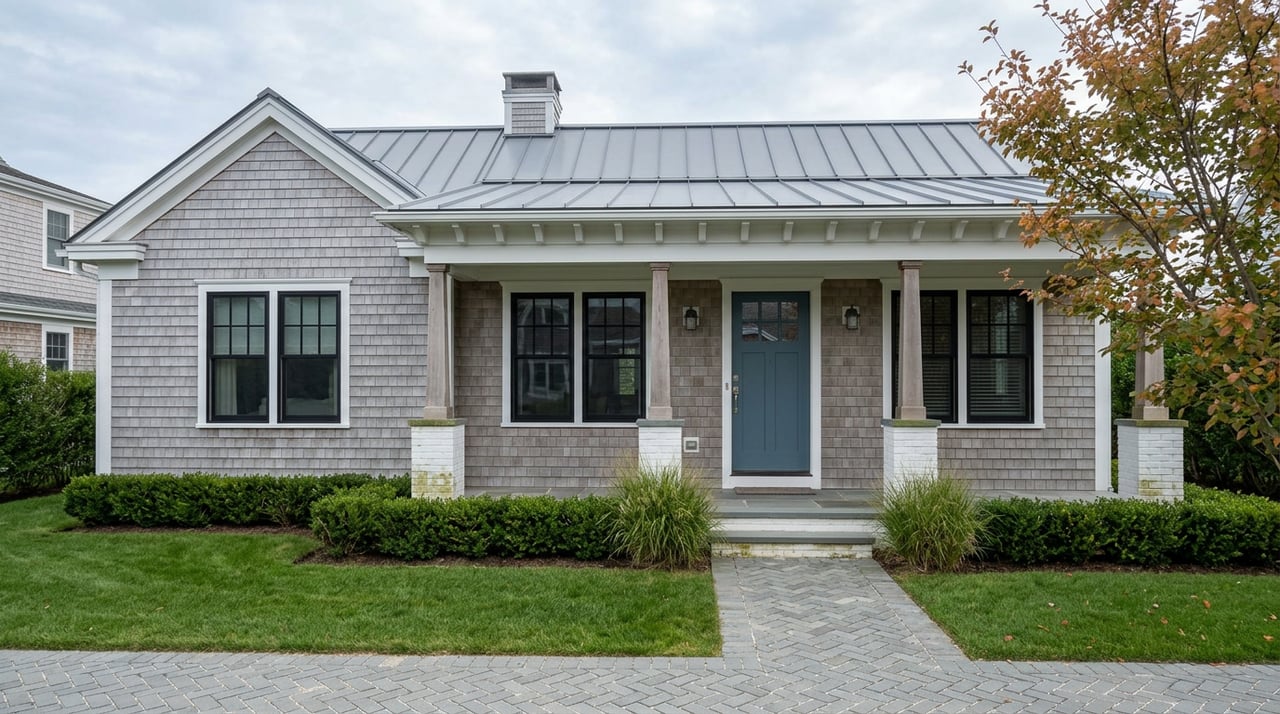
None of this works, though, without the housing pattern that makes it walkable. The West End's residential character comes from streets like Nevada, Ohio, and Pennsylvania Avenues, where small, closely set bungalow homes, many of them originally built as summer cottages, now function as year-round houses. That density is why a surf shop, a skate park, and a fishing pier can all sit within a few blocks of each other and actually get foot traffic in October. Nobody is driving to any of it.
Back in June, the Long Beach Historical Society led a walking tour through these same blocks, starting from a marker at New York Avenue on the Park Avenue median, tracing how the area evolved from sand dunes and summer bungalow colony into the full-time neighborhood it is now. That kind of tour doesn't get organized for a place people just pass through. It gets organized for a place people have decided is worth explaining to newcomers, which is its own quiet signal about how residents here think about the neighborhood's identity.
Why the Mismatch Is the Point
Here's what all of this adds up to, and it's easy to miss if you only ever check one calendar. The West End doesn't have a single season that starts on a date and ends on a date. It has at least three overlapping ones: a produce and market season that runs into November, an arts and music season that stops a month earlier, and an unofficial, no-closing-date season built around surfing, skating, and fishing that never checks either calendar at all.
If you live off Nevada, Ohio, or Pennsylvania Avenue, you already know this without thinking about it. You know Kennedy Plaza gets quieter before the beach does. You know the surf shop on West Park stays open through weather that would shut down a produce stand. The value of naming it explicitly isn't news to you so much as confirmation of a pattern you've lived but never seen written down.
That's really what makes the West End the West End. Not the boardwalk, not the bungalows on their own, but the fact that its public institutions and its private ones run on completely different clocks, and somehow that's exactly what keeps the neighborhood full in October when its own city calendar says the season is over.
If you're curious what a home in this particular stretch of Long Beach is actually worth once you factor in a block that never really goes quiet, Robyn Goldowski has spent years tracking the South Shore market street by street. Get your instant home valuation whenever you're ready to see where your West End address fits into it.